
Social Security Survivor Benefits Can Help Families After a Loved One Dies?

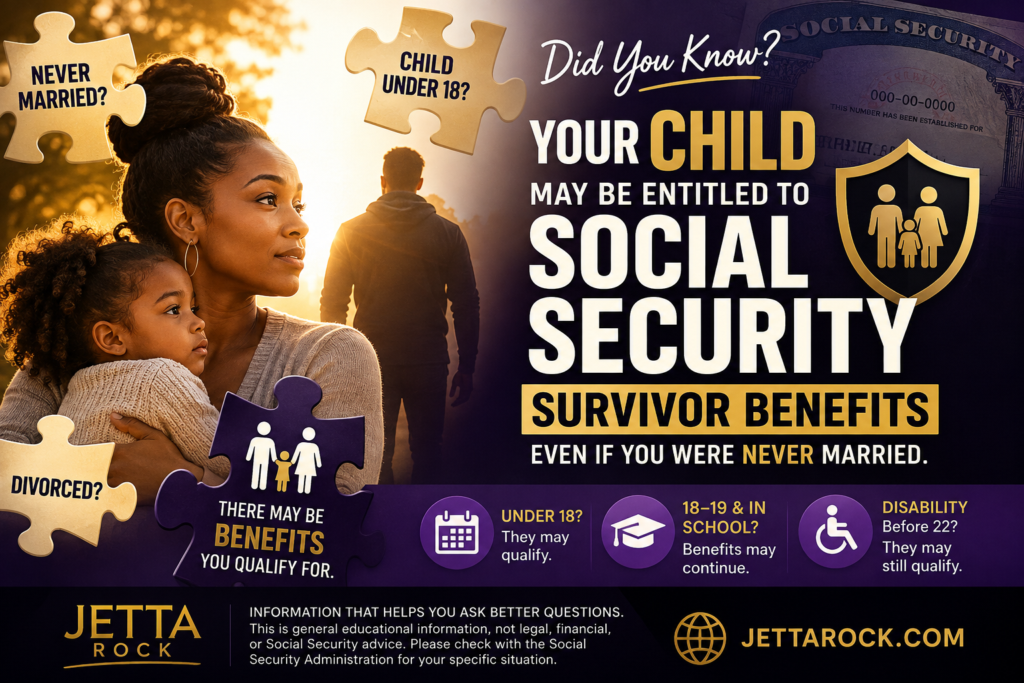
Did you know?
When someone dies, their family may be dealing with grief, funeral expenses, bills, children, and a whole new financial reality.
But did you know that Social Security may provide monthly survivor benefits to certain family members of a person who worked and paid Social Security taxes?
And here’s something many people may not realize:
The parents of a child do not necessarily have to be married for the child to qualify for Social Security survivor benefits.
Let’s talk about it.
What happens if an unmarried parent dies?
Imagine a mother and father have a child together, but they were never married.
If the father dies and had worked long enough under Social Security, their child may be eligible for survivor benefits based on the father’s work record.
The child generally must be unmarried and:
- Be under age 18;
- Be 18 or 19 and attending elementary or secondary school full time; or
- Have a qualifying disability that began before age 22.
So, being unmarried does not automatically prevent a child from receiving Social Security survivor benefits.
But what about the mother or father who was never married to the deceased person?
This is where things can get confusing.
The surviving parent does not simply receive a survivor benefit because they had a child with the person who died.
However, Social Security has provisions for a surviving parent who is caring for the deceased person’s qualifying child. In certain circumstances, a surviving parent can receive benefits while caring for the deceased worker’s child.
That means the question isn’t simply:
“Were they married?”
There are other questions Social Security looks at, including the child’s age, whether the child is receiving benefits, and the circumstances of the surviving parent.
What happens when the child turns 18?
Normally, a child’s survivor benefits stop when the child reaches 18.
But there are exceptions.
If the child is 18 or 19 and is a full-time student in elementary or secondary school, benefits may continue under Social Security’s rules.
An adult child may also qualify if they have a qualifying disability that began before age 22.
So if your child is approaching 18, don’t assume the benefits automatically disappear without checking with Social Security.
What if the parents were married?
Now we have a different situation.
A surviving spouse may qualify for survivor benefits if the marriage generally lasted at least nine months before the worker’s death.
There are exceptions to the nine-month rule, so a person should not assume they are automatically disqualified because the marriage was shorter.
A surviving spouse may potentially qualify at age 60 or older, at age 50 or older if disabled, or at any age while caring for the deceased person’s qualifying child.
What if they were divorced?
Here’s another rule many people don’t know.
A divorced spouse may potentially qualify for survivor benefits if the marriage lasted at least 10 years and the other Social Security requirements are met.
There can also be special rules when a divorced parent is caring for the deceased person’s qualifying child.
So divorce does not necessarily mean that a former spouse has no rights to Social Security survivor benefits.
What about the children?
Children can be an important part of Social Security survivor benefits.
The Social Security Administration says eligible children of a deceased worker may receive benefits based on that parent’s work record.
In general, an eligible child can receive up to 75% of the deceased worker’s benefit, although Social Security’s family maximum rules can affect the amount actually paid to each family member.
The big takeaway
Whether the parents were married, never married, or divorced can make a difference — but marriage is not the only factor.
A child may have rights to survivor benefits even when the child’s parents were never married.
A surviving spouse may have rights.
A divorced spouse may have rights.
And a parent caring for the deceased person’s child may have rights under certain circumstances.
That’s why it is important not to assume:
“I’m not married, so I don’t qualify.”
or
“My child is 18, so everything is over.”
or
“We’re divorced, so Social Security can’t help.”
The rules can be more complicated than that.
Did you know?
Sometimes the most important benefit is the one you didn’t know you could ask about.
If someone in your family has died and they worked and paid Social Security taxes, it may be worth contacting the Social Security Administration to find out whether you or your children qualify.
You can learn more directly from the Social Security Administration at ssa.gov/survivor.
A Note From Jetta Rock
Jetta Rock is sharing this information for general educational and informational purposes. We are not a law firm, Social Security office, financial advisory firm, or legal professional. This article is not legal, financial, or Social Security advice and should not be used as a substitute for advice from a qualified professional or the Social Security Administration. Rules and individual circumstances can affect eligibility and benefit amounts. Please contact the Social Security Administration directly to determine what benefits you or your family may qualify for.
Jetta Rock — Information that can help you know what questions to ask.



Responses